

Vibroacoustics refers to technology that translates sound you can hear into sound you can feel. – Stephen Douel
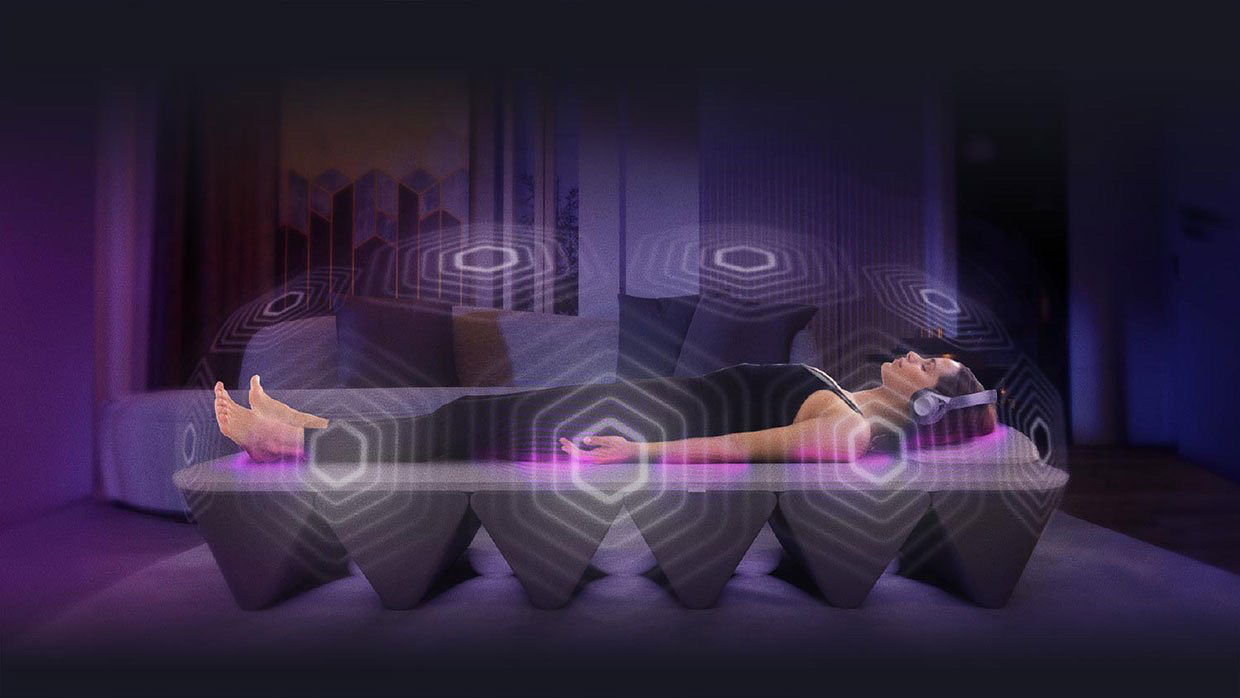
This therapeutic approach uses sound vibrations that resonate throughout the body, reaching down to the cellular level. These vibrations engage both physiological and neurological systems, facilitating relaxation, stress relief, and healing. VAT typically utilizes low- to mid-range sinusoidal frequencies and/or therapeutic music to produce these effects.
The modality was first defined by Olav Skille and Juliette Alvin in 1968.
How does VAT work?
Sound is converted into vibration through transducers, which deliver these vibrations directly to the body. As sound waves contact the body’s surface, they induce resonance that travels deeply through tissues, muscles, and cells—essentially “massaging” the body from the inside.
These low-frequency vibrations stimulate the nervous and circulatory systems and promote parasympathetic activation, which can:
• Slow the heart rate
• Lower blood pressure
• Induce states of calm, focus, and deep relaxation
What can VAT help with?
Vibroacoustic Therapy has shown benefits for a wide range of conditions, including:
• Pain and muscle tension
• Poor circulation and inflammation
• High blood pressure
• Neurological and psychological disorders (e.g., Parkinson’s, PTSD, anxiety, depression)
• Respiratory conditions such as COPD and asthma
• Cognitive performance and mental clarity
• Sleep disturbances and stress-related disorders
Clinical studies and experiential reports highlight the following outcomes:
• Pain reduction (fibromyalgia, musculoskeletal pain)
• Mood enhancement and relief from anxiety, depression, PTSD, or dementia
• Improved sleep quality, focus, and cognitive clarity
• Enhanced circulation and autonomic nervous system regulation
Neuroscience Behind Vibroacoustic Therapy
Vibroacoustic Therapy engages the brain and nervous system through two main sensory channels: auditory (sound) and somatosensory (vibration).
Together, these pathways influence brainwave patterns, neural connectivity, and autonomic regulation.
Brainwave Entrainment & Neural Synchronization
Lee Bartel, a leading researcher in music and health, developed specific low-frequency music (30–120 Hz) to entrain brainwaves and encourage desirable mental states:
| Frequency Range | Brain State | Effect |
| Delta (0.5–4 Hz) | Deep sleep | Promotes cellular repair and regeneration |
| Theta (4–8 Hz) | Meditation, deep relaxation | Enhances memory consolidation and emotional processing |
| Alpha (8–12 Hz) | Calm focus | Reduces anxiety, boosts creativity |
| Beta (12–30 Hz) | Alertness, cognition | Supports mental engagement and problem-solving |
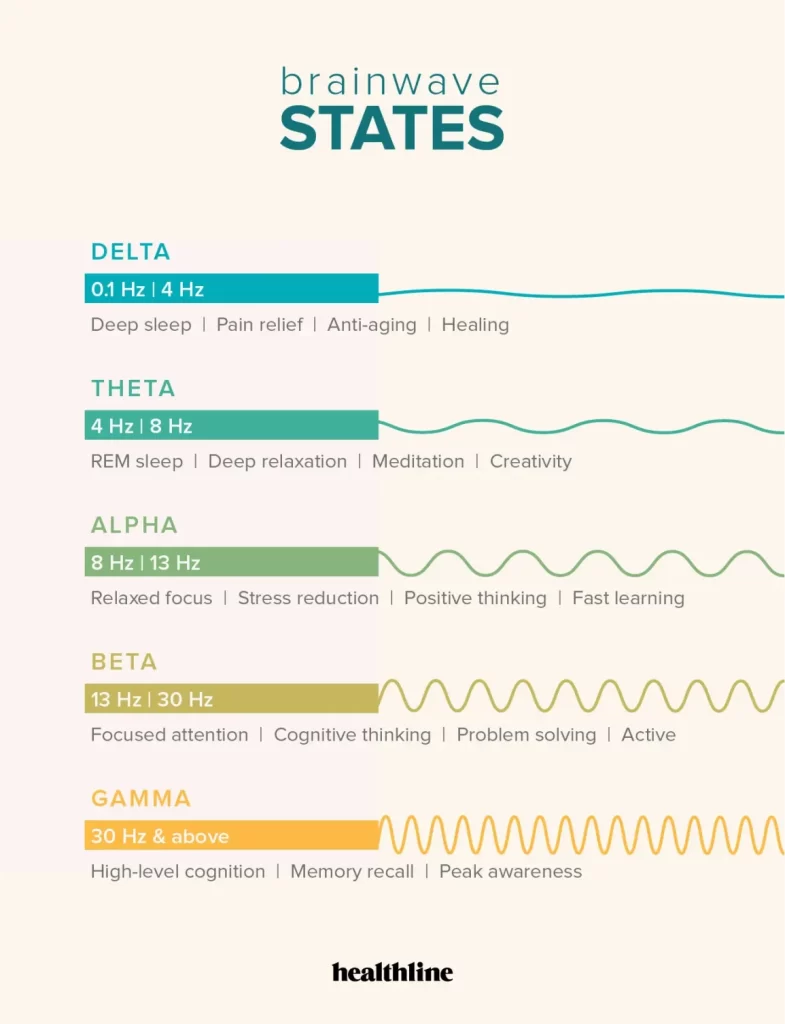
This process, called neural entrainment, may help regulate dysregulated brain activity seen in:
• Fibromyalgia
• Depression
• Alzheimer’s and dementia
• PTSD and anxiety disorders
Auditory-Motor Connectivity
When the brain perceives rhythmic, low-frequency sound (especially under 60 Hz), signals travel via the auditory system to deeper brain regions involved in movement and regulation:
• Thalamus, basal ganglia, and cerebellum are stimulated, aiding coordination and motor function.
• Motor cortex and limbic system (emotions) are also engaged, enhancing mood and motivation via neurotransmitters like dopamine and serotonin.
This effect supports applications in:
• Parkinson’s disease
• Stroke recovery and motor rehabilitation
• Mood regulation and emotional resilience
Somatosensory Integration: Vibrotactile Stimulation
Vibrations applied to the body are detected by mechanoreceptors (e.g., Pacinian corpuscles) in the skin and connective tissue. These sensory inputs are processed by the somatosensory cortex, producing therapeutic effects:
• Pain modulation: Vibration can override pain signals via the Gate Control Theory.
• Body awareness and grounding: Enhances proprioception and integration in the parietal lobes, beneficial for trauma recovery.
• Parasympathetic activation: Stimulates the vagus nerve, reducing cortisol levels and promoting deep relaxation.
Clinical and Neurophysiological Evidence
Research led by Lee Bartel and the University of Toronto’s Music and Health Research Collaboratory has shown:
• EEG studies demonstrate increased alpha/theta wave activity and greater neural coherence post-treatment.
• Heart Rate Variability (HRV) improves, indicating better autonomic nervous system balance.
• fMRI scans show reduced activity in pain centers and enhanced connectivity in emotional regulation networks.
Vibroacoustic Therapy offers a unique integration of music, vibration, and neuroscience to promote healing, stress relief, and enhanced brain-body functioning. With growing clinical interest and supporting research, VAT continues to emerge as a promising modality for both physical and mental health.